Engineering Clarity For Complex Systems.
KREXX helps engineering teams structure, model, validate, and improve complex technical systems using a systems engineering and MBSE-led approach.
Our Services & Capabilities
KREXX combines systems engineering, simulation, digital twin logic, and capability transfer into one structured engineering framework. We do not begin with a dashboard, software tool, or isolated analysis. We begin with the system: its requirements, boundaries, interfaces, operating modes, risks, data, and decisions.
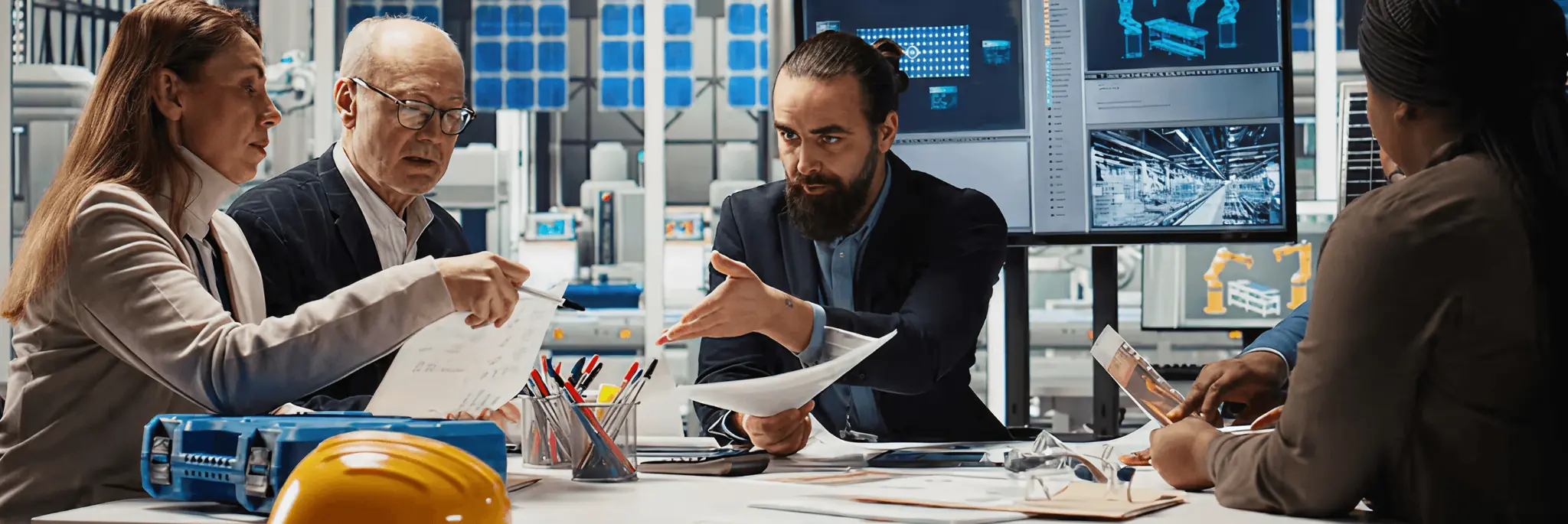
MBSE and Systems Engineering
Model-based structure for requirements, interfaces, architecture, verification, validation, and system-level decision clarity.

Digital Twin and Asset Intelligence
Engineering logic that connects asset data, physical behaviour, failure modes, health states, and operational decisions.

Simulation and Decision Tools
Reusable simulation workflows and decision-support tools for trade studies, root-cause analysis, scenario testing, and performance prediction..
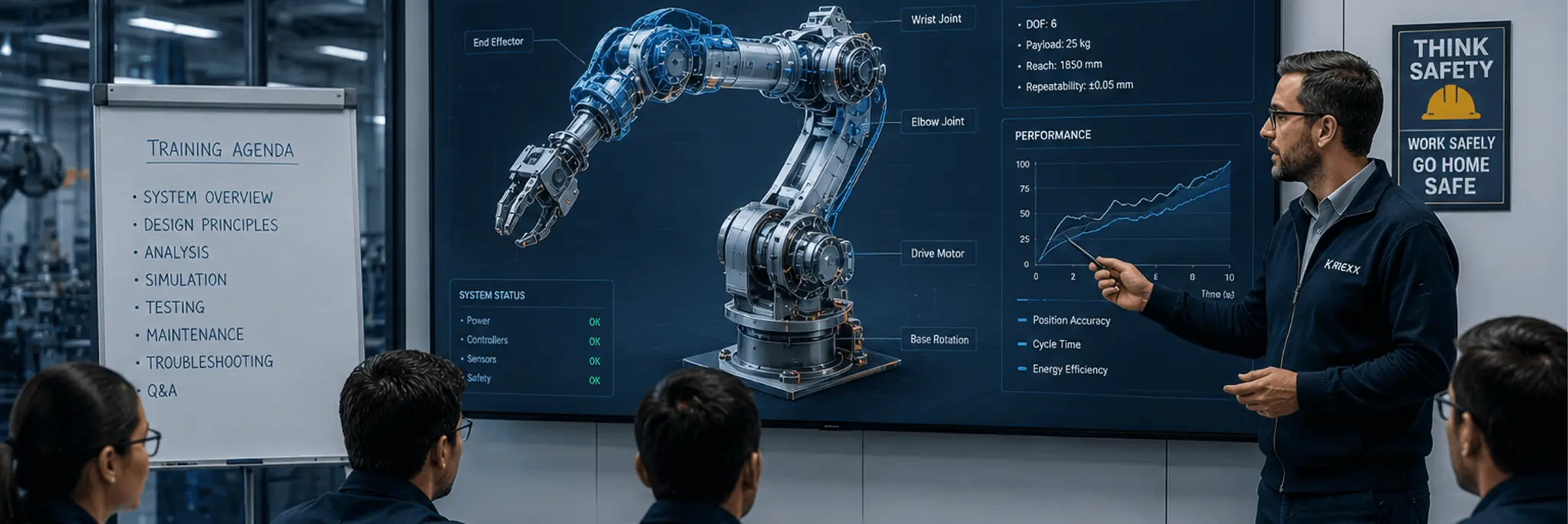
KREXX Academy
Applied training and capability transfer in MBSE, simulation, and digital twin methods — for graduates building a career and for engineering teams building internal capability.
Methodology First. Domain Second.
Complex systems do not fail only because one component was poorly designed. They usually fail when requirements, interfaces, assumptions, models, data, and verification evidence are not connected.
Methodology First. Domain Second.
Complex systems do not fail only because one component was poorly designed. They usually fail when requirements, interfaces, assumptions, models, data, and verification evidence are not connected.
METHOD PHASE DETAILS
DIAGNOSE PHASE PARAMETERS
Clarify the true problem first. Map physical boundaries, isolate mechanical dependencies, and separate peripheral symptoms from root system vulnerabilities.
KEY STATS & REALITIES
"80% of system design changes stem from inadequate baseline requirement diagnosis."
DIAGNOSE
Define the real system problem: boundaries, stakeholders, operating modes, constraints, risks, failure modes, and decision criteria.
MODEL
Structure the requirements, architecture, interfaces, behaviours, data flows, and physical logic at the level of detail the decision requires.
VALIDATE
Connect models and assumptions to evidence through field data, test data, calculations, simulations, sensitivity analysis, and engineering review.
TRANSFER
Document the workflow, hand over the tools, and train the team so the capability continues inside the organization.
DIAGNOSE
Clarify the true problem first. Map physical boundaries, isolate mechanical dependencies, and separate peripheral symptoms from root system vulnerabilities.
MODEL
Structure the asset system. Represent relationships, behaviours, failure modes, and fluid pathways on a single continuous, verifiable logical roadmap.
VALIDATE
Establish proof. Connect physical claims directly to experimental evidence. Run closed-loop virtual failure loops and test cases against simulated Twins under extreme transience.
TRANSFER
Embed the capability. Hand over the custom simulator tools, codebase architecture, digital twin, and train your division to master the method directly.
The gaps nobody draws on the
slides, solved.
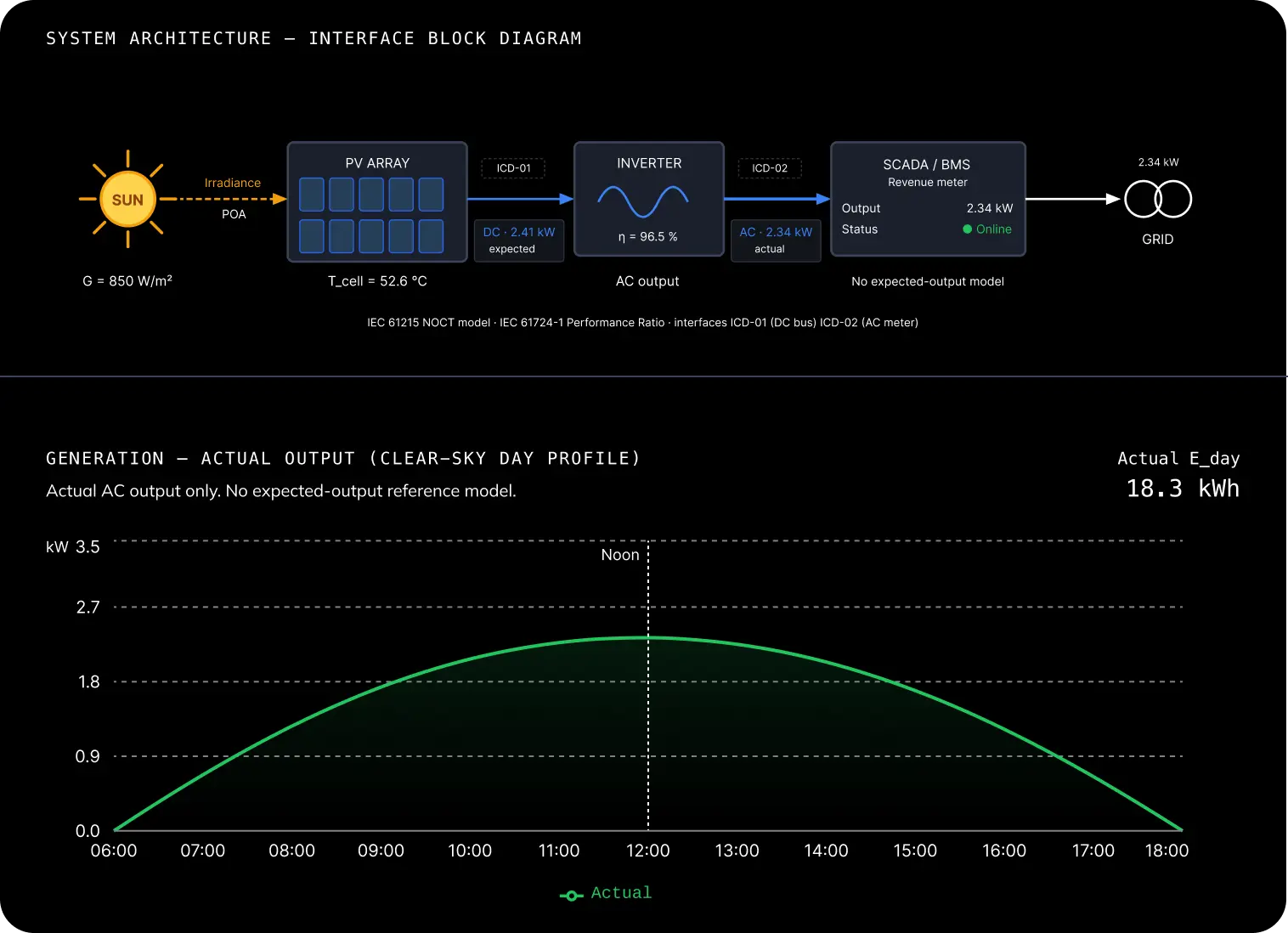
Conduct real-time stress, physics modeling, and operational testing of complex systems in a safe, fully integrated digital environment. Compare conventional telemetry directly with structural model logic.
Model-based expected vs. actual performance ratio tracking to isolate hidden environmental degradation.
Live variable sliders representing peak irradiance, morning low temperature, soiling loss, and fault injection.
Seamless transferability across PV arrays, HVAC chillers, battery packs, and EV thermal loops.
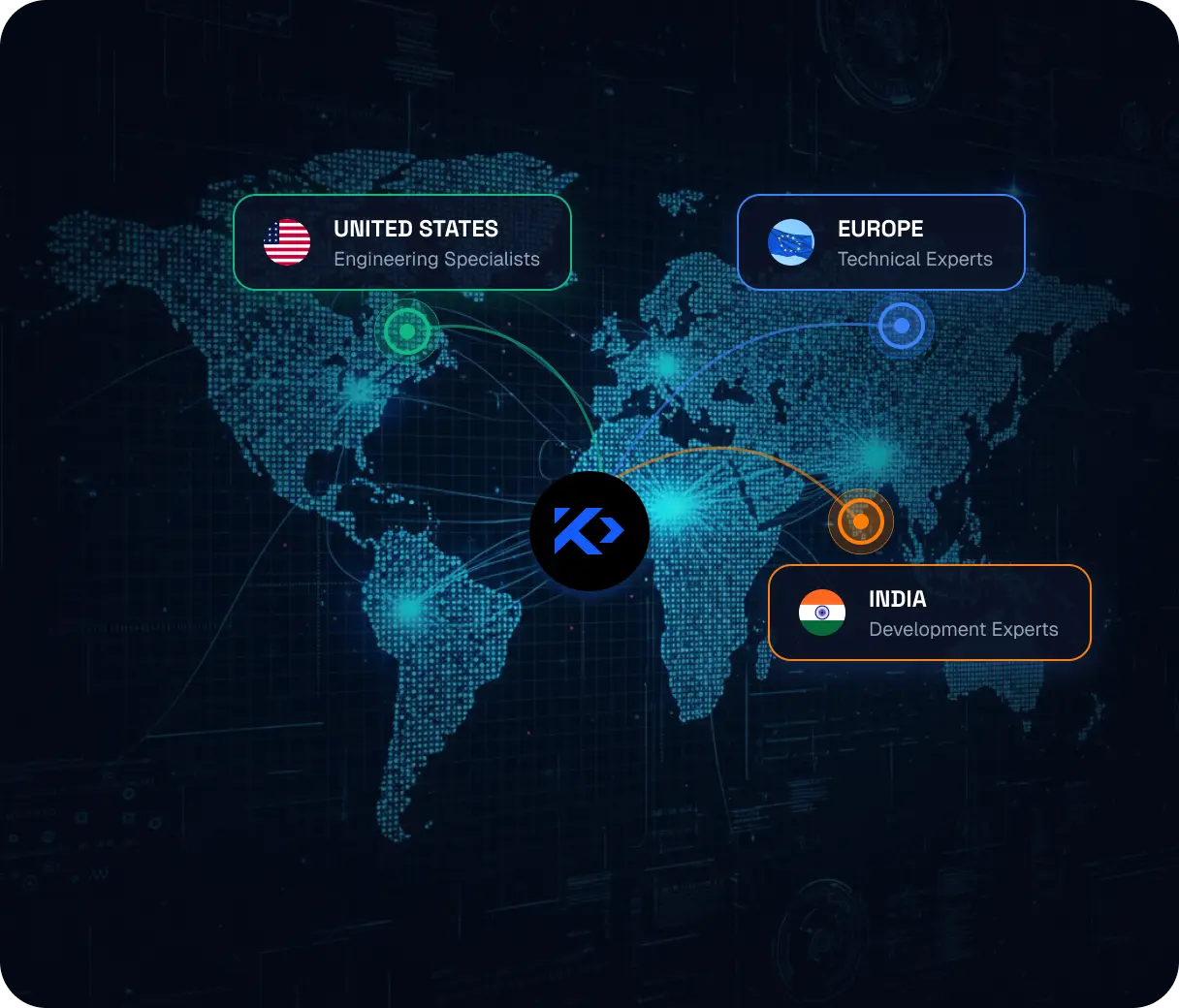
World-Class Specialists. Two
Continents. One Mission.
Krexx's technical specialists handle the deep mathematical, algorithmic, and engineering complexities of your project. Operating from coordinated hubs in the US and Europe, our multidisciplinary teams deliver certified excellence to high-stakes industries.
Model-based systems engineering specialists
Creating intelligent, connected digital twin
Advanced simulation & analysis expertise
End-to-end systems architecture experts
That's the KREXX commitment.
Delivering engineering excellence with a global perspective.
%
FEWER
Defects per changed requirement in a documented MBSE case study.
X
DEFECT CORRECTION SHIFT
Cost escalation when requirements errors are found later in the lifecycle, based on NASA lifecycle-cost research.
$M
METHOD COMPLIANCE
Potential cost of a 12-month complex product launch delay, according to PwC launch-delay analysis.
%
WORKFORCE SKILLS SHIFT
Of workers’ core skills expected to change by 2030, according to the World Economic Forum.
The Gaps Nobody Draws On The Slide.
Complex engineering programs rarely fail in one visible place. They fail in the gaps between requirements, interfaces, models, data, software, hardware, suppliers, and verification evidence.
TAP TO CONNECT
DISCONNECTED STATES
Requirements lose traceability
A requirement changes, but the simulation, test plan, supplier interface, or software logic does not update with it.
Interfaces hide the real risk
Subsystems may work individually, but integration fails because mechanical, electrical, thermal, software, and data interfaces were not modeled clearly.
Data does not explain behaviour
Assets produce telemetry, but dashboards often show symptoms without connecting them to physical causes, failure modes, or decisions.
Models do not become capability
A simulation, report, or dashboard is delivered, but the client team cannot maintain it, extend it, or use it confidently after handover.
KREXX CLOSES THE GAP WITH:
- Requirements architecture
- Traceability Matrices
- Verification Mapping
- Digital Thread Thinking
KREXX CLOSES THE GAP WITH:
- System Architecture
- Interface Maps
- N2 Diagrams
- Dependency Structures
- Integration-Risk Reviews
KREXX CLOSES THE GAP WITH:
- Digital Twin Logic
- Health-State Definitions
- Failure-Mode Mapping
- Anomaly Detection
- Performance Monitoring Frameworks
KREXX CLOSES THE GAP WITH:
- Documentation
- Training
- Capability Playbooks
- Build-Operate-Transfer Support
Requirements lose traceability
A requirement changes, but the simulation, test plan, supplier interface, or software logic does not update with it.
KREXX CLOSES THE GAP WITH:
- Requirements architecture
- Traceability Matrices
- Verification Mapping
- Digital Thread Thinking
Interfaces hide the real risk
Subsystems may work individually, but integration fails because mechanical, electrical, thermal, software, and data interfaces were not modeled clearly.
KREXX CLOSES THE GAP WITH:
- System Architecture
- Interface Maps
- N2 Diagrams
- Dependency Structures
- Integration-Risk Reviews
Data does not explain behaviour
Assets produce telemetry, but dashboards often show symptoms without connecting them to physical causes, failure modes, or decisions.
KREXX CLOSES THE GAP WITH:
- Digital Twin Logic
- Health-State Definitions
- Failure-Mode Mapping
- Anomaly Detection
- Performance Monitoring Frameworks
Models do not become capability
A simulation, report, or dashboard is delivered, but the client team cannot maintain it, extend it, or use it confidently after handover.
KREXX CLOSES THE GAP WITH:
- Documentation
- Training
- Capability Playbooks
- Build-Operate-Transfer Support
When requirements are unclear, models are disconnected, integration issues repeat, or dashboards
do not support decisions, KREXX helps structure the problem and define the next practical step.
Interactive Engineering Lab
Two twins are awake. Walk the models yourself.
- Live Simulation Lab
- Real Time Fault Injection
- Digital Twin Simulation
PV Array Digital Twin
LIVEHVAC Chiller Digital Twin
LIVEBattery Pack Twin
Coming SoonEV Thermal Twin
Coming SoonINDUSTRIES WE SERVE
Engineering Across Complex Systems
Helping teams navigate technical complexity with
structured, model-based frameworks.


Start With The System.
We combine consulting, digital engineering, and workforce development into one integrated engineering ecosystem.